I got three separate messages about it within an hour of the news breaking. Not about a film, not about a wedding, but about an invitation. Manish Malhotra is showing at Paris Haute Couture Week, becoming only the fourth Indian designer ever asked to join that room. My phone did not stop. And honestly, neither did my mind, because this is not just a headline for the fashion pages. It is a shift in how the whole world is going to read Indian craft from here on out, and it changes something about how I talk to my brides too.
For years, the story we told ourselves about Indian fashion on the global stage was one of borrowed rooms. We showed up at Cannes, we showed up at the Met, we were guests at someone else's party, however dazzling the gown. Couture week is different. Couture week is the room itself, the one with the strictest door in fashion, built for the handful of houses whose hand embroidery and construction meet a standard so exacting it has its own French legal definition. An Indian name walking into that room on its own terms, with karigari that has been done in workshops in Mumbai and Lucknow for generations, is not a guest appearance. It is recognition that our version of couture was couture all along.
The Aesthetic: Structure Is Winning Over Volume
What is interesting is the timing. Cannes tightened its own red carpet rules this year, quietly discouraging the oversized trains and the sheer, voluminous gowns that used to guarantee a front page. The effect has rippled everywhere. The silhouettes I am seeing dominate right now, on red carpets from Mumbai to the south of France, are sculptural and fitted rather than expansive. Think a clean mermaid line that skims the body before flaring at the knee, a structured bodice with real architecture in the seams, a saree draped with couture precision instead of loose romance. Aishwarya Rai Bachchan, Alia Bhatt and Aditi Rao Hydari carrying India's flag through this year's festival season are proof of the same instinct: less spectacle for spectacle's sake, more craft you can actually see up close.
Closer to home, the Bright Entertainment Awards in Mumbai earlier this month told the same story on a smaller scale. The strongest looks on that carpet were not the biggest ones. They were the considered ones, sharp tailoring, jewel tones done with restraint, a single statement rather than five competing ideas.
The Stylist's Touch: Reading the Room Before You Dress It
This is the part I keep coming back to with clients this week. A red carpet, a runway, a Sangeet stage, they are all rooms with rules, spoken or not, and my job is to read the room before I ever touch a rack. When Cannes changes its dress code, a good stylist does not fight it, we translate it. When couture's standard tightens, we do not shrink our ambition, we sharpen our execution instead.
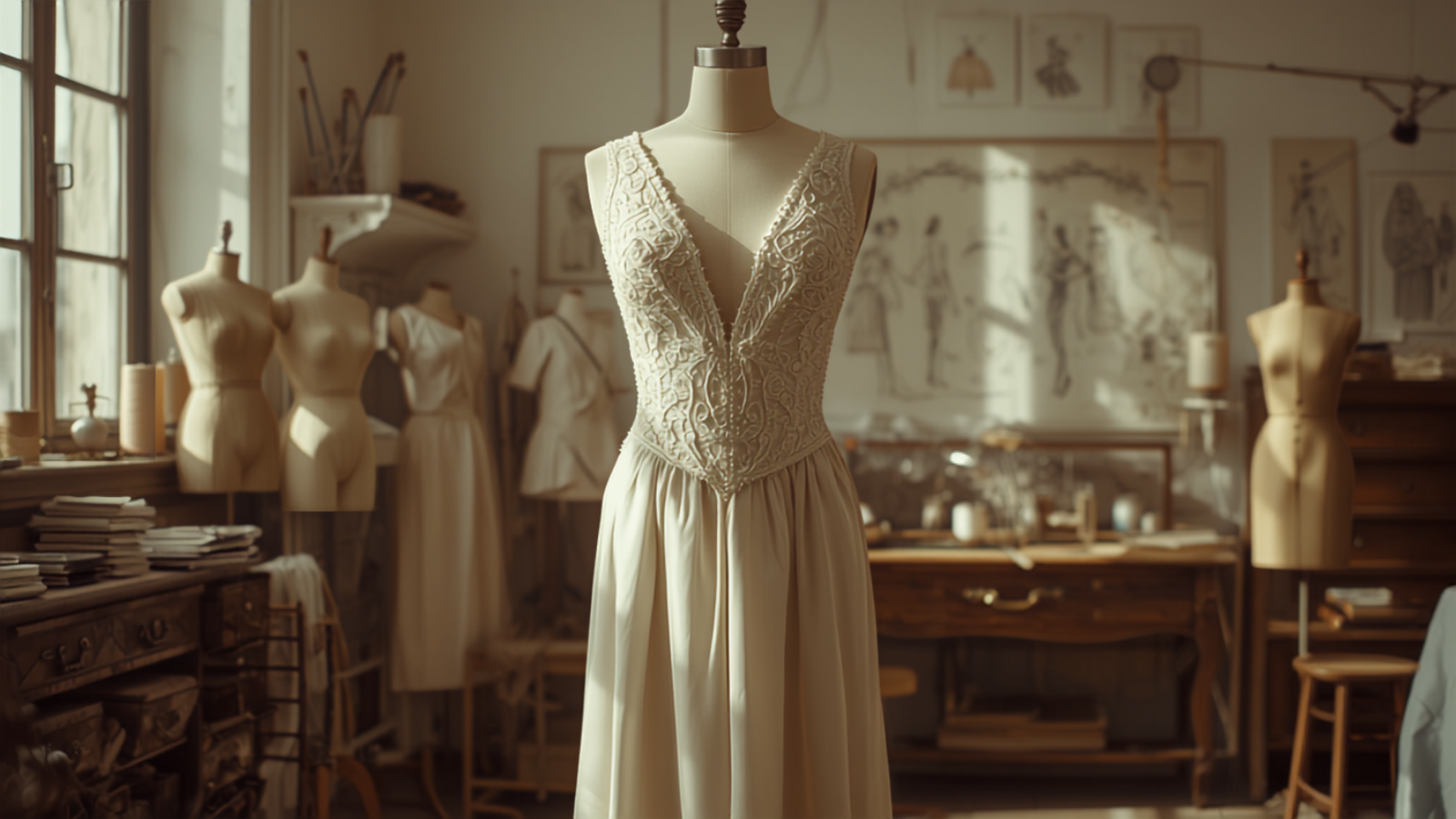
That is exactly what I think this Paris moment represents for Manish Malhotra, and for Indian design more broadly. It is not softer, more Western silhouettes trying to fit into a European mould. Early reporting on his haute couture debut points to precisely the opposite: heritage embroidery, zardozi and hand finishing rendered with couture-level precision, an ivory and heirloom palette that reads as unmistakably Indian while speaking the technical language Paris respects. The lesson for every stylist, and every bride, is that you do not have to dilute your culture to be taken seriously in a global room. You have to execute it better than anyone else can.
What This Means for My Brides This Season
I know a couture week in Paris feels a world away from a Sangeet in Udaipur, but the principles travel, and I have spent this week folding them into fittings. A few things I am telling every client right now:
Let the craft carry the look, not the volume. A fitted lehenga with exceptional zardozi will always photograph stronger than a wider one with less handwork.
Choose one focal point per outfit. If the embroidery is the story, keep the jewellery quiet. If the polki or the nath is the story, simplify the silhouette around it.
Treat your Phere outfit like a couture presentation, not a costume. Precision in the drape, the fitting, the finishing, matters more than sheer scale.
Borrow structure from tailoring even in traditional pieces. A boned bodice under a saree blouse, a sharply cut sherwani jacket, gives a silhouette that holds up under camera flash all day.
Do not be afraid to let heritage techniques, gota patti, zardozi, chikankari, be the headline of the outfit rather than a detail on top of a Western shape.
The SGK Philosophy: Craft as Confidence
This is the thread I have believed in since the day I started SGK Styles. Indian craft has never needed to prove itself by shrinking to fit somebody else's silhouette. It needed rooms willing to look closely enough to see what our karigars have always known, that this work belongs at the very top of the conversation. Manish Malhotra walking into that Paris atelier with embroidery from home is not an exception to the rules of couture. It is a reminder of who helped write them.
If you are building a wardrobe this season, whether it is for your own wedding, a milestone celebration, or simply a year you want to dress with more intention, I would love to help you find that same confidence in your own Style DNA. Come sit with me, bring your inspiration boards, and let us build something with the same precision Paris just applauded.
With love and style,
Shreya Gupta Kedia
Founder, SGK Styles


