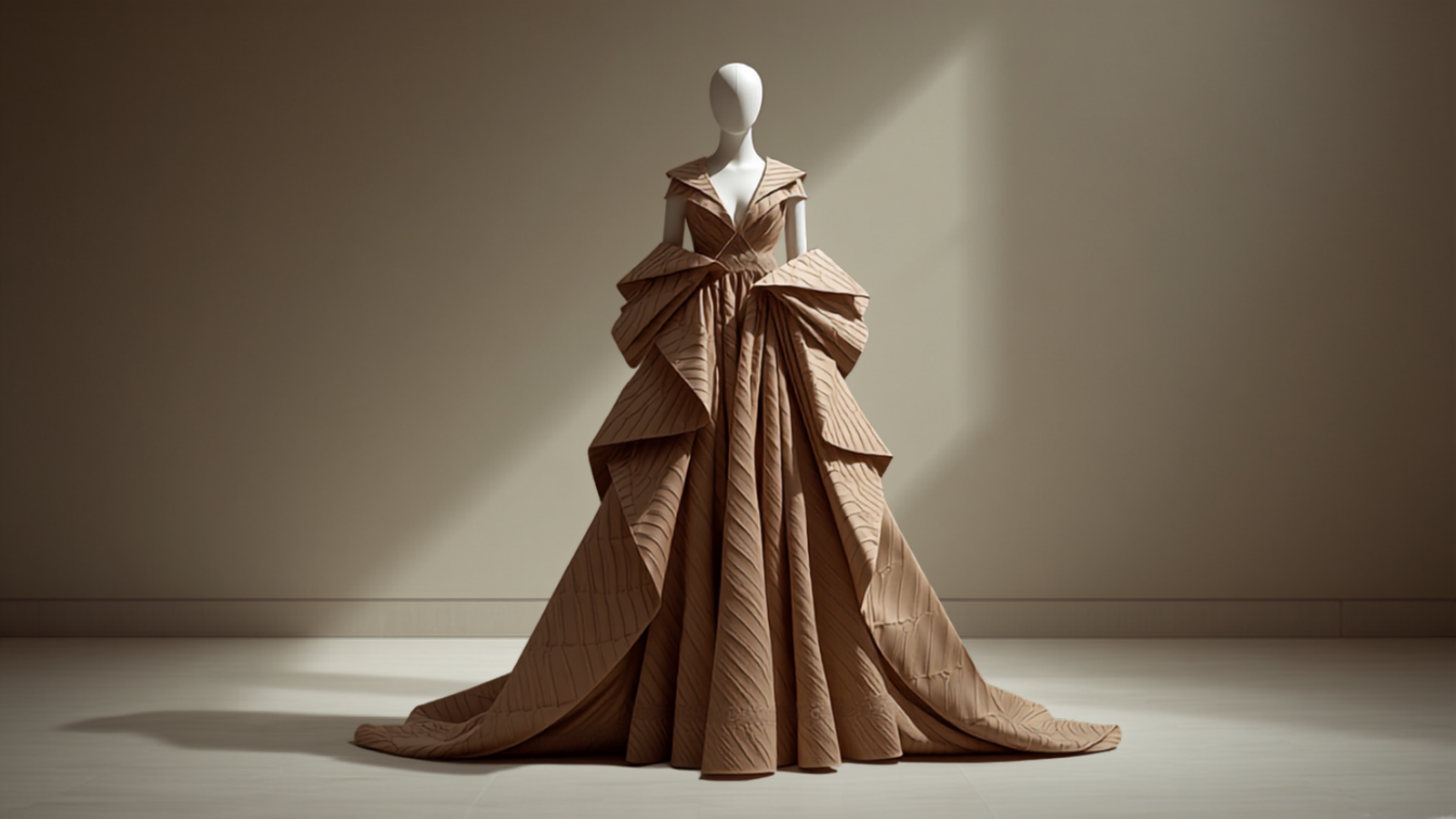
A bride sat across from me a few weeks ago and said something I have not stopped thinking about. She said she did not want to look like a bride. She wanted to look like herself, just amplified. No red, no gold zari, no anything her mother had already worn to three weddings that year. What she wanted, without quite having the language for it, was sculpture. Something with weight and architecture and a point of view. That is the moment I always steer a client toward Gaurav Gupta and Amit Aggarwal, the two names in Indian couture who treat a bridal outfit less like a garment and more like a structure you step into.
I was reminded of this again watching Gaurav Gupta's Light Song show in Mumbai this past week. Ananya Panday closed it in an ivory couture lehenga with a structured sweetheart blouse and a train that seemed to pour rather than fall, an architectural infinity motif anchoring the waist in hundreds of hand set sequins, pearls and crystals. More than forty looks, over 150 artisans, four thousand hours of work. The show was framed around the relationship between the sun and the moon, transformation and shadow, and it showed. This is not incremental bridalwear. It is a full rethink of what a modern Indian bride is allowed to look like.
The Aesthetic: Gaurav Gupta's Fluid Futurism
Gaurav Gupta has spent two decades building a language of sculptural draping, liquid metal pleating, and silhouettes that behave like they are mid movement even when the bride is standing still. His bridal work leans into asymmetry and volume in a way that reads as sci-fi meets temple carving. It is not for a bride who wants to disappear into tradition. It is for one who wants tradition to bend around her.
The Stylist's Touch: I never let a Gaurav Gupta piece compete with itself. If the lehenga has that infinity waist detail or a sculpted train, the jewellery goes quiet: a single statement cuff, maybe a nath if her face can hold it, and nothing else fighting for attention. Hair goes sleek and architectural too, not soft curls. The whole point is that the outfit is the event.
The Aesthetic: Amit Aggarwal's Industrial Alchemy
Where Gaurav Gupta sculpts with movement, Amit Aggarwal builds with material. His signature is metallics: gold, silver, gunmetal, copper, layered with iridescent and holographic textures that catch light like nothing else on an Indian runway. He famously resists chasing new fabrics for the sake of novelty, choosing instead to keep pushing the same handful of materials further, including an ongoing project weaving ikat from leftover dye yarns. This season ivory lehengas with that signature metallic sheen are what his millennial brides are gravitating toward, structured drapes over soft ones, hand embroidery that reads more like inlay work than embellishment.
The Vibe: I tell brides an Amit Aggarwal lehenga is couture for someone who also cares about the practical reality of wearing it for twelve hours. His pieces are famously light, some weighing barely a kilo and a half, and they fold like origami instead of crushing. That matters enormously on a wedding day when nobody tells you about the fourth outfit change happening in a car.
Who Wears Which
I get asked constantly how to choose between the two, and honestly it comes down to temperament more than trend. If your bride wants a moment, something the room audibly reacts to when she enters, Gaurav Gupta's sculptural silhouettes deliver that theatre. Think Sangeet or reception energy: bold, worked, unmistakably a showpiece. If she wants a look that feels considered and quietly powerful, something a stylist would call architecture rather than drama, Amit Aggarwal's metallics and structured drapes do that with more restraint. I have styled both for Phere ceremonies, and both work, but they say different things about the bride wearing them.
Either way, this is where I remind my brides that couture spotlighting is not about copying a runway look wholesale. It is about identifying the one or two design decisions, an infinity motif, a metallic drape, a particular sculptural sleeve, and letting your own stylist translate that into something built for your body, your ceremony, and your family's expectations of what a bride should look like walking down the mandap.
Shopping It Right, Practically
A few things I tell every client before we walk into either atelier:
Book the first fitting at minimum four months out; sculptural and structured pieces need multiple fittings to sit correctly on the body, not just the mannequin.
Ask about weight and mobility before you fall in love with a silhouette. A dramatic train is only dramatic if you can actually walk the phere in it.
Choose one statement element, waist detail, sleeve, drape, and let your jewellery and hair support it rather than compete.
If you want the avant-garde aesthetic but a smaller budget, both labels' prêt or occasionwear lines borrow the same design language at a more accessible scale.
Save the boldest, most sculptural piece for the ceremony where you want the strongest visual memory, usually Sangeet or reception, and let your Phere outfit carry more restraint.
The SGK Philosophy
This is exactly the kind of decision I love sitting with a bride through. Couture like this is not something you buy off a rack of expectations. It is something you choose the way you would choose art for your own home: because it says something true about you, not just because it is trending. My role as your stylist, as the Creative Director of your wardrobe, is to help you find that truth in the fabric before the fitting ever begins.
If you are building a wardrobe that leans into sculpture, structure and a point of view rather than convention, I would love to talk it through with you. Reach out and let's start the conversation about what your Style DNA actually wants to wear.
With love and style,
Shreya Gupta Kedia
Founder, SGK Styles


