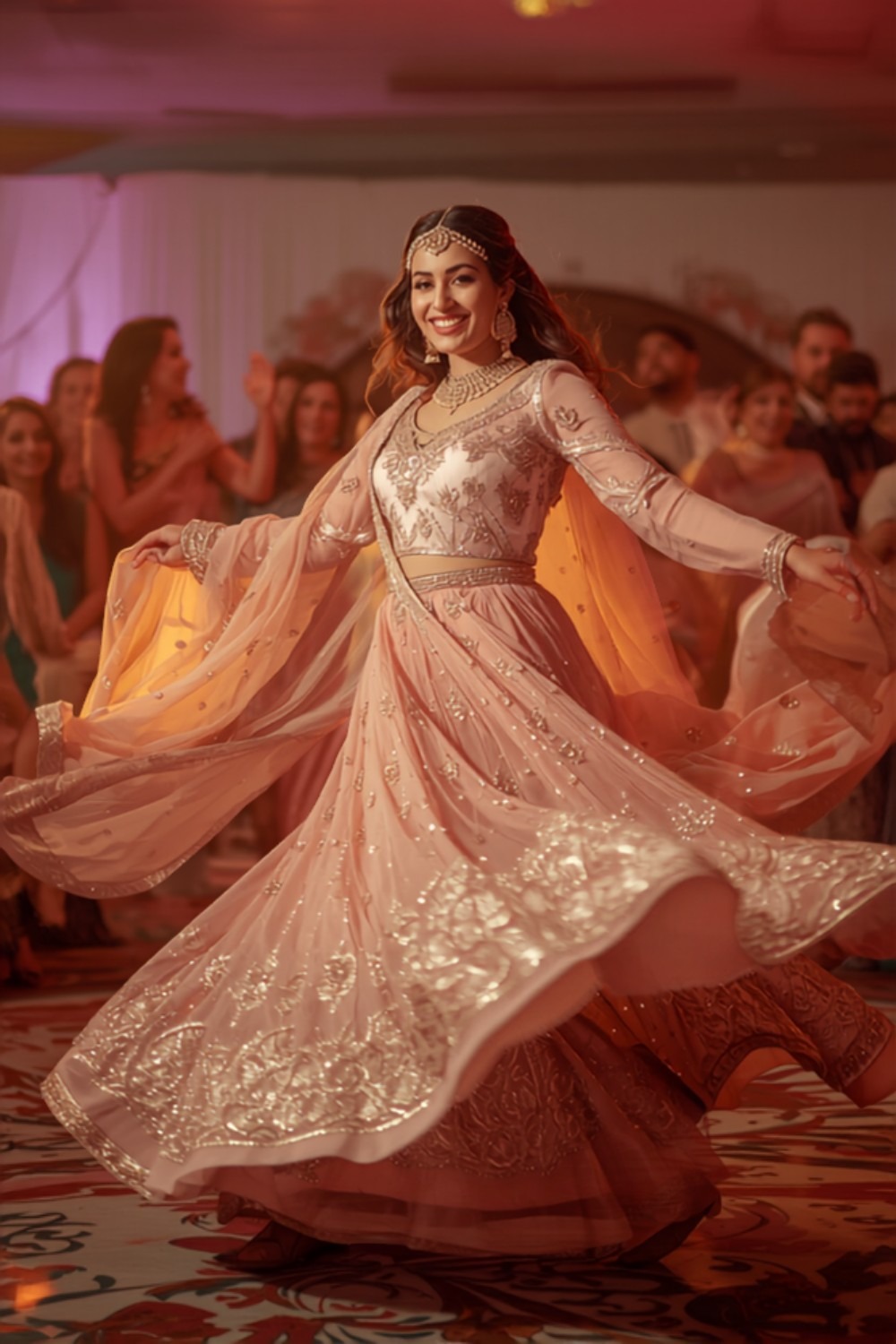
A bride sat across from me last week, halfway through her third fitting, and said something I hear almost every season now, just in slightly different words. She said, "I want to feel like myself in this, not like I'm carrying a chandelier down the aisle." I laughed because I have heard versions of that sentence from brides in Mumbai, Jaipur and Dubai alike, and this year it has stopped being a request and started being the entire brief. If you have been anywhere near a wedding shoot or a bridal shopping trip this season, you already know what I am about to say: the biggest trend for 2026 is not a colour or a print. It is weight, and how little of it a bride is now willing to carry.
For years, "bridal" and "heavy" were treated as synonyms. More zardozi meant more seriousness. A lehenga that needed two people to lift felt like proof of how much the day mattered. I understand where that came from, and I still love a fully worked, heirloom-grade piece for the pheras. But the brides walking into my studio this year want something different for the six or seven hours they are actually living in the outfit: they want to sit at the mandap without a dupatta pulling at their shoulder, hug their grandmother without pins digging in, and dance at the sangeet without doing math about how many hours are left before the corset gives out.
The Aesthetic: Grandeur That Doesn't Announce Its Own Weight
This season's silhouettes are lighter almost across the board, and it shows most clearly in the fabric choices designers are leaning into. Where velvet, raw silk and dense Banarasi brocade used to anchor a bridal look, I am now specifying organza, tissue and fine net far more often, fabrics that catch light beautifully and move when a bride moves instead of holding her still. Manish Malhotra's most recent couture line is a good example of where the industry is heading: reports out of this year's showcase point to lehengas roughly a third lighter than what the same ateliers were sending down the runway just a few years ago, with emerald and dusty pink introduced as fresh bridal colours alongside the reds and golds. Sabyasachi's newest lookbook, meanwhile, has settled into a quieter, more grown-up palette of oxblood, old rose and ivory, proof that a lighter garment does not have to mean a less serious one.
The Fabric Shift: Why Tissue and Net Are Doing What Velvet Used To
The Stylist's Touch: what I actually watch for in a fitting is not the fabric name on the tag, it is how the garment behaves when a bride raises her arms for a jaimala or bends to touch her father's feet. Organza and tissue hold structure without stiffness. Fine net lets us build volume in a skirt without adding kilos to it. Crepe and chiffon are doing enormous work right now for cocktail and sangeet looks specifically because they drape rather than sit, which matters when a bride is being photographed mid-laugh rather than mid-pose. None of this is about doing less. It is about redirecting where the craftsmanship goes, so the embroidery is placed with intention instead of piled on for effect.
The Drape and the Dupatta: Sheer Is Not the Same as Simple
If there is one accessory shift defining this trend edit, it is the dupatta. The old instinct was to reach for the heaviest, most embellished dupatta a bride owned and drape it over her head for every ceremony. What I am doing instead this year is reaching for tulle, organza or fine net dupattas finished with minimal embroidery and hand-placed crystal work, then choosing the drape itself, cape-style over one shoulder, a structured single throw, a soft half-drape, to do the visual work that fabric weight used to do. It reads as more considered, honestly, because every fold is a decision rather than a default. I am also seeing the corset blouse move firmly into bridal territory this year, paired under sarees and lehengas for a sculpted line that lets everything below it stay fluid. It is a very Gen Z instinct, structure up top, ease everywhere else, and I am here for it.
The Colour Story: Depth Without the Drag
Colour is following the same logic as fabric. Brides are still choosing red for the ceremony itself, that will never fully change and I would not want it to, but for the surrounding functions I am styling far more dusty rose, sage, champagne, rust and antique gold than I was even two seasons ago. These are colours that read rich in photographs without needing dense zari to feel substantial. I have also had three brides this year ask me to work a family saree, a mother's or a grandmother's, into a new silhouette rather than buying an entirely new heavy piece. It is one of my favourite requests to get, because it lets the emotional weight of the garment do what the physical weight used to.
A few things I tell every bride weighing this trend for her own wedding:
Ask your designer for the actual weight of the finished lehenga, not just the fabric name, before you commit.
Save your heaviest, most structured piece for the ceremony where you will be seated the longest, and go lighter for the functions where you'll be standing, dancing or greeting guests.
A sheer dupatta with hand-placed crystal work photographs just as richly as a fully embroidered one, ask to see both side by side before you decide.
If you love a heavy heirloom piece, consider having it reworked into a lighter silhouette rather than retiring it entirely.
Try your blouse, corset or otherwise, under the actual dupatta drape you plan to wear, not just on its own, before the final fitting.
This is really the whole philosophy behind how I work as a stylist, the Creative Director of your wardrobe rather than just the person who picks the outfit. Lightness is not the opposite of grandeur. Done well, it is what lets grandeur move through an entire wedding day instead of surviving it. My job is to find where a bride's story and her comfort meet, and to make sure the garment carries the weight of the day so she does not have to.
If you are somewhere in the early part of this decision, wondering whether you can have both the drama and the ease, I would love to sit with you and figure it out. Come in for a consultation and let's build a wardrobe that feels like you, all week long, not just for the photographs.
With love and style,
Shreya Gupta Kedia
Founder, SGK Styles


