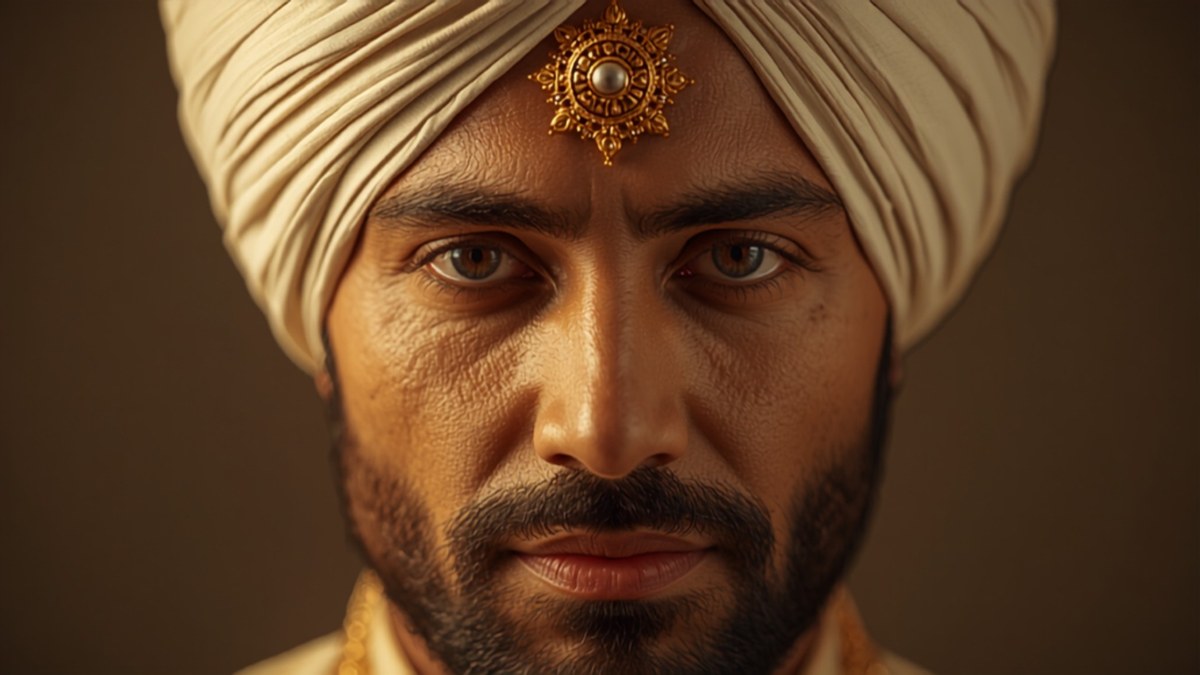
A groom walked into a fitting last month and asked me why his sherwani, which had barely any visible embroidery, cost more than his brother's heavily worked one from three years ago. I get some version of this question every wedding season. My answer is always the same: you're not paying for what you can see from across the room anymore. You're paying for what you can feel when someone stands close enough to shake your hand.
That shift, from ornamentation to material, is the real story of how I'm dressing grooms this year. For a long time, a man's wedding outfit was judged by how much zari it carried and how loudly it caught the light. Now my most stylish grooms are asking a quieter question: what does this fabric actually feel like, and what does it do in a room full of cameras and relatives standing two feet away all evening.
The Aesthetic: Fabric as the New Embroidery
Walk into any good atelier this season, from Hyderabad to Delhi, and you'll see the same story repeating. Ivory still dominates order books, but it's an ivory built from luxe wool blends, textured silks and matte finishes rather than flat, shiny fabric that photographs well but wears hot. Sage green, charcoal, deep maroon and muted metallics are all having a moment too, and every one of them depends entirely on the fabric doing the work, because there's no heavy embroidery left to hide behind.
I tell my grooms that minimal embroidery is not the same as minimal effort. A sherwani with restrained handwork on a beautiful matte silk actually requires more precision from the tailor, not less, because there's nowhere for a slightly uneven seam or a stiff drape to hide. The fabric has to move correctly on its own. This is the same logic I use with my brides when I steer them toward a quiet zardozi over a loud one: less noise means every remaining detail has to be right.
The Stylist's Touch: Reading a Fabric Before You Buy It
Here's what I actually do in a fitting room, because I think it demystifies the whole process. I ask a groom to sit down in the outfit before he decides anything. A stiff brocade that looks magnificent standing still can crease badly and dig into the shoulders the moment he's seated for four hours of Phere, and nobody warns grooms about this until it's too late. A textured silk or a good wool blend, on the other hand, tends to fall back into shape, which matters enormously when you're moving between a Haldi in the afternoon heat and a Sangeet stage that same night.
I also make every groom touch the lining, not just the shell. A gorgeous outer fabric paired with a cheap, scratchy lining is one of the most common mistakes I see in ready-to-wear sherwanis, and it's the difference between an outfit that photographs beautifully and one the groom is quietly miserable in by 9 pm.
For the bandhgala crowd, and I have more of them every year, the rules tighten even further. Clean lines and impeccable tailoring live or die by the fabric's stiffness. Too soft and the jacket loses its architecture by the second hour; too stiff and it looks like armour rather than a suit. I've started asking tailors for a mid-weight wool blend with just enough structure to hold a silhouette through a full evening of handshakes and hugs, without turning into a board.
Building the Wardrobe, Not Just the Outfit
This is also where I push my grooms to think across the whole wedding week rather than obsessing over one showstopper look. A heavier, richly textured fabric earns its place at the main event, but the same weight will be unbearable at a daytime Mehendi. I usually build the week in three fabric tiers: something breathable and lightly textured for the daytime functions, the statement weight for the wedding day itself, and a sleeker, lighter bandhgala or Indo-western piece for the reception, when everyone, including the groom, just wants to sit down and eat.
Pastels have crept into this conversation more than I expected this year. Powder blue, pistachio, champagne and dusty lavender are showing up on grooms who, two seasons ago, would only have considered ivory or maroon. What makes these colours work is, again, the fabric. A pastel in a flat, shiny material can read cheap or costume-like. The same shade in a textured silk or a raw-finish cotton blend looks deliberate and current, which is exactly the restraint I want my grooms projecting next to a bride in full colour.
Here's what I want every groom to walk away knowing before his first fitting:
Sit, don't just stand, in any outfit before you commit to it, especially for the main ceremony look.
Ask to feel the lining, not just the outer fabric; a scratchy lining ruins an otherwise beautiful sherwani.
Match fabric weight to the function: lighter and breathable for daytime, statement weight for the wedding day, sleeker for the reception.
If you're leaning pastel, choose a textured fabric over a flat, shiny one so the colour reads intentional rather than costume-like.
Minimal embroidery demands more precise tailoring, not less, so budget for a skilled hand even when the look is quiet.
I think of a groom's wardrobe the same way I think of a bride's: as a series of decisions that should feel effortless to everyone watching and considered by everyone who made them. Fabric is where that consideration actually lives this year, quietly, under the surface, doing far more work than any embroidery could. If you're starting to plan your own wedding wardrobe and want a second pair of eyes on the fabrics, not just the silhouettes, I'd love to help you build it out function by function.
With love and style,
Shreya Gupta Kedia
Founder, SGK Styles