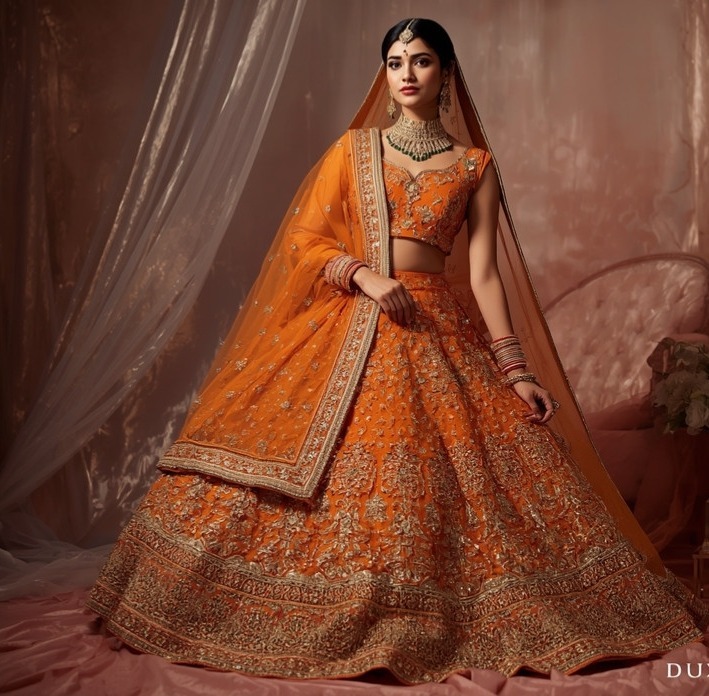
A bride walked into my studio last month with a moodboard full of blush and ivory, the safe palette every second consultation seems to start with. Then she paused on one reference image: a burnt orange lehenga, the colour of marigolds at dusk, and said "but is this too much." I told her what I am telling every bride this season. Orange is not too much. Orange is exactly right, and it might be the single most interesting thing happening in Indian bridal fashion in 2026.
I have watched pastel weddings dominate mood boards for the better part of a decade. Blush, sage, butter yellow, all of it beautiful, all of it a little safe. What I am seeing now, in fitting rooms and on the runway both, is a swing back toward colour with real conviction. Burnt orange, tangerine and saffron are showing up across bridal collections this year, and unlike the neon oranges of a decade ago, this is a warmer, richer, more considered orange. It reads less like a trend and more like a homecoming.
The Aesthetic: Marigold, Not Neon
The orange I am styling for my brides is not one note. Think saffron with a hint of rust, tangerine warmed down toward terracotta, the deep orange of a marigold garland rather than the flat orange of a highlighter. This is the colour of Haldi turmeric, of temple flowers, of a Rajasthani sunset, and that is precisely why it feels so instinctively right on an Indian bride. It was never actually new. It has been in our courtyards and our poojas all along. We just forgot to put it on the bride herself.
What makes orange work as a bridal colour in 2026 rather than a bridesmaid colour is how designers are grounding it. I am seeing it paired with oxblood and old rose for depth, the kind of moody, wine-adjacent styling Sabyasachi has leaned into this year, or lifted with ivory and gold zardozi so it reads celebratory rather than heavy. Ombre is doing a lot of work here too. A lehenga that deepens from a pale apricot at the waist into a full saffron at the hem catches golden hour light in a way flat colour simply cannot, which is exactly why I am pushing it hardest for my outdoor and destination brides this season.
The Stylist's Touch: Building Around a Statement Colour
The mistake I see most often when a bride commits to a bold colour is that she then tries to make everything else bold too. Orange is generous. It does not need competition. When I dress a bride in a saffron or burnt orange lehenga, my jewellery choices go quieter, not louder: antique kundan in warm gold rather than stark polki, a single statement piece like a nath or a choker rather than layering everything at once. The dupatta is where I let the craft speak, a fine gota patti border or delicate zardozi edge that catches light without shouting.
Blouse construction matters enormously here too, something I think about with every bride regardless of colour. A structured, boned blouse in the same saffron family, or in a contrasting oxblood, gives the whole silhouette a spine, especially if the lehenga itself is fuller and more flowing. And for brides nervous about wearing so much colour on their skin tone, I always say the same thing: orange is one of the most universally flattering colours against Indian skin tones, warm or cool undertone, because it sits so close to the colours already in our complexion.
The Vibe: Where This Colour Belongs on the Wedding Calendar
Orange earns its place across the wedding, not just the big day. For a Haldi, it is almost inevitable and I love leaning into that, styling brides in a soft marigold-toned outfit that photographs beautifully against turmeric and flowers. For the Mehendi or Sangeet, a deeper tangerine lehenga with movement, something that catches the light on the dance floor, works even better than the expected pinks. And increasingly, I am styling brides in a full saffron or burnt orange lehenga for the Phere itself, particularly destination and daytime weddings where the colour reads as radiant rather than costume-like against natural light.
This is also a colour that photographs exceptionally well against most Indian wedding settings, whether that is the sandstone of a Rajasthan fort, the green of a Karnataka coffee estate, or the simple white of a banquet hall. It has warmth built in, so it never needs the venue to do the work for it.
Here is what I tell every bride considering this colour for her wedding:
Choose your undertone deliberately: burnt orange and rust lean warmer and suit most Indian skin tones, while a brighter tangerine needs slightly cooler accessorising to balance it.
Let the dupatta carry the craft detail (zardozi, gota patti, fine embroidery) so the base lehenga colour stays clean and confident.
Pull jewellery warmer and quieter: antique gold, kundan, a single nath or maang tikka rather than a fully layered set.
Ombre and dip-dye treatments are worth the investment if you are marrying outdoors or at golden hour, since they respond to natural light in a way flat colour cannot.
Do not confine orange to the Haldi. A tangerine Sangeet outfit or a saffron Phere lehenga is one of the most memorable choices a bride can make right now.
If you are nervous, start smaller: an orange dupatta or blouse against an ivory or gold lehenga is a gentle way in before committing to full colour.
I always tell my brides that my job is never to talk them into a trend, it is to help them see themselves more clearly through it. Orange is having a moment in 2026, but what I love about it is that it is not really a trend at all. It is a colour that was always part of our weddings, in our flowers and our rituals and our festivals, finally making its way onto the bride. That is the kind of trend I want to build a wardrobe around: one with roots.
If you are curious whether this colour belongs in your own wedding wardrobe, I would love to talk it through with you. Every bride's skin tone, venue and story is different, and that conversation is where the real styling begins.
With love and style,
Shreya Gupta Kedia
Founder, SGK Styles


