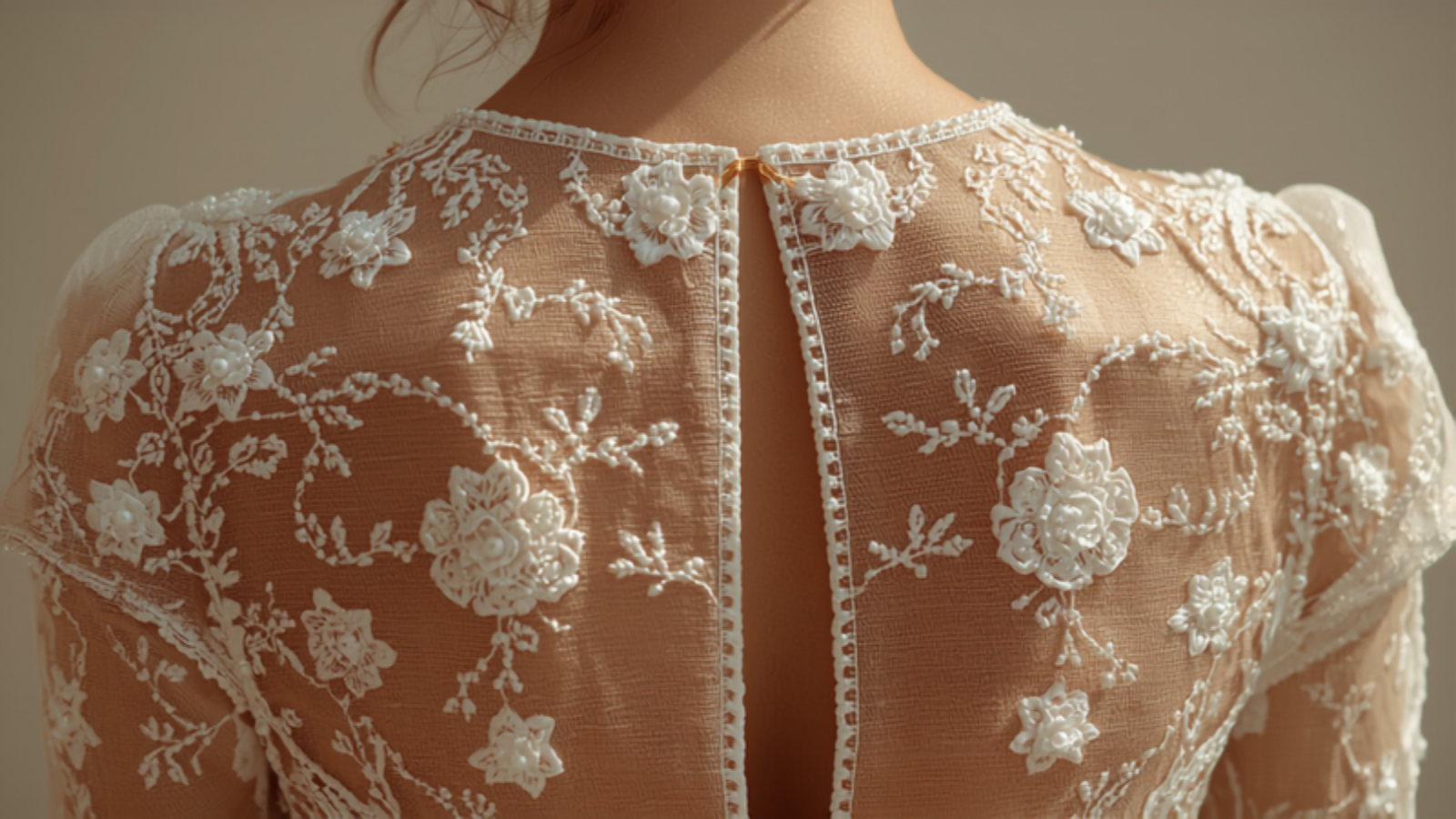
A bride walked into her second fitting last week, turned her back to the mirror before I could even say hello, and asked, "Can we make this the part everyone remembers?" She was pointing at her blouse. Not the skirt, not the dupatta, the blouse. Three years ago that sentence would have surprised me. Today it is the most common request in my studio, and it tells you exactly where bridal fashion is heading this season.
For decades the lehenga skirt did the talking and the blouse was support staff: safe, covered, forgettable under a heavy dupatta. That hierarchy has quietly flipped. The 2026-27 bride is treating her blouse the way a couture house treats its showstopper, and once you see the shift you cannot unsee it at a single wedding this year.
The Aesthetic: The Blouse as the Hero Piece
Walk any couture showroom right now and the story is told from the shoulders up. Corset-style bodices with genuine boning, curved necklines that sculpt rather than cover, high necks paired with deep dramatic backs, cape sleeves that move like a second garment entirely. Embroidered sleeves have become their own canvas, often carrying more handwork than the skirt beneath them. Pearl detailing and tie-up backs add the kind of quiet drama that photographs beautifully whether the bride is seated at the mandap or walking into her Sangeet.
What I love about this shift is what it does structurally. A corset blouse gives support without the boxiness of old-style linings, so brides actually stand taller through a twelve-hour day. A cape blouse gives you drama in photographs without adding a single extra layer of heat. The craft has simply migrated to where the camera lingers longest: your face, your collarbones, your shoulders.
The Vibe: Featherweight Fabrics Replace the Armour
The second, related shift is weight, or rather the deliberate absence of it. For years a heavier lehenga signalled a bigger budget and a more serious bride. That equation is breaking. Ateliers, including Sabyasachi's own ligne, are reporting a real move away from stiff raw silk and velvet toward tissue, soft silk, georgette and organza. The embroidery has not gotten smaller, it has simply learned to sit on kinder fabric.
Sheer is having its own quiet moment too, particularly at the dupatta and veil. Tulle, organza and fine net, worked with hand-placed crystals or the thinnest border of embroidery rather than a dense zardozi edge, are replacing the heavy silk dupattas that used to anchor a look. A sheer dupatta lets the blouse do its job. Nothing competes with the neckline you just spent four fittings perfecting.
The Palette: Pastels Step Into the Spotlight
Colour has followed the same instinct toward lightness. Blush, champagne, mint, lavender and powder blue are showing up in serious couture commissions, not just as Mehendi alternatives but as full bridal looks for daytime Phere and destination ceremonies. What makes 2026's pastels different from earlier soft-colour moments is the finishing: tone-on-tone embroidery, subtle metallic thread and 3D floral work in the same family of shades, so the colour never reads flat or bridesmaid-adjacent. It reads considered, almost architectural.
That said, I am not retiring the deep end of the palette. Emerald, deep burgundy and midnight navy remain the reigning choices for evening receptions, precisely because they hold their richness under artificial light the way pastels cannot. My honest read on the season: pastels for daylight ceremonies and destination weddings, jewel tones once the sun goes down. Most of my multi-day brides are now wearing both within the same wedding, and it works because each palette is doing a specific job rather than competing for the same moment.
The Stylist's Touch: Building the Trend Into a Real Wardrobe
Here is where I slow brides down, because a trend edit is not a shopping list, it is a set of tools. If your face and collarbones are going to carry the embroidery this season, your hair and jewellery need to make room for that, which usually means a cleaner neckline in your jewellery and a hairstyle that clears the shoulders rather than covering them. A cape blouse wants a choker, not a long rani haar competing for the same real estate.
Fabric weight matters most for the ceremonies where you sit for hours. I steer Phere lehengas toward the lighter bases even when the bride wants heavy visual embroidery, because tissue and soft silk can carry serious handwork without the ache that comes at hour six. Velvet and raw silk still have a place, mostly for winter evening functions where warmth is welcome rather than punishing.
And on colour: choose your pastel with your own undertone, not the runway's. Blush against a warm undertone can wash a bride out exactly the way the wrong red does. This is the part a trend report will never tell you, and it is the entire reason a stylist sits with you at the fabric stage rather than after the outfit arrives.
A Few Practical Takeaways
Let the blouse carry the heaviest handwork this season, and choose a comparatively quieter dupatta so the two do not compete.
For daytime and destination ceremonies, ask your designer about tissue, organza or soft silk before defaulting to raw silk or velvet.
Reserve pastels for daylight functions and jewel tones for evening receptions within the same wedding wardrobe.
Match your jewellery neckline to your blouse neckline: a high or corset blouse wants a choker, not a long haar.
Always test the actual sample weight in a ten-minute fitting before committing to any heavily embroidered piece.
Commission early. Fine hand-placed crystal work and 3D floral embroidery both take real atelier time.
The Thread That Ties It Back
This season's trend edit is really a story about intention, which is what I mean when I talk about Style DNA at SGK Styles. The blouse taking the lead, the fabric getting lighter, the palette softening in daylight and deepening at night, none of it is arbitrary. Every shift is the industry admitting what brides have wanted for years: to look extraordinary and still be able to breathe, dance and sit through eight hours of Phere without regret.
If you are starting your bridal wardrobe for the season ahead and want to know which of these trends actually belong on you, and which are simply loud on Pinterest, come sit with me. We will build a wardrobe that borrows the best of this season and still looks unmistakably like you.
With love and style,
Shreya Gupta Kedia
Founder, SGK Styles


