A bride once stood in my studio, turning slowly in front of the mirror, and said something I hear in almost every fitting: "It looks perfect on the hanger. Why doesn't it feel perfect on me?" That question is the whole job, really. A lehenga is not a garment you put on. It is a structure you build around a body, a schedule and a set of ceremonies that each ask for something different from the fabric. The hanger has no idea about any of that.
This season I am seeing the shift everywhere, and the designers are naming it out loud. Sabyasachi has said the modern bride wants weight in meaning, not in fabric, that she wants to walk, sit, hug her family and dance for six hours instead of surviving the night in armor. Manish Malhotra's newer lines are cutting average lehenga weight by close to a third compared to a few years ago. That is not a trend note. That is a fitting room revolution, and it changes how I work with every bride from the first consultation.
The Aesthetic: Drape Over Volume
The silhouettes I am building right now lean on fall and movement rather than sheer bulk. Organza, tulle and silk cotton blends hold their shape while staying light enough to actually breathe in, which matters enormously if your functions stretch from a daytime Haldi to a Sangeet that runs past midnight. I tell my brides to think of the lehenga less as a wall of fabric and more as something with intention behind every layer, so the silhouette reads rich in photographs without punishing the person wearing it.
Colour is doing interesting work this year too. Oxblood, ivory, dusty pink, emerald and old rose are leading the bridal palette, and bridal orange has had a real moment, a warm, unapologetic shade that photographs beautifully against marigold and gold jewellery. For evening ceremonies I am pulling jewel tones like sapphire and deep plum, and for daytime Mehendi or Haldi looks I keep coming back to blush and soft peach, because pastel tones catch daylight in a way deep colours simply cannot.
The Stylist's Touch: Building the Fit in Layers
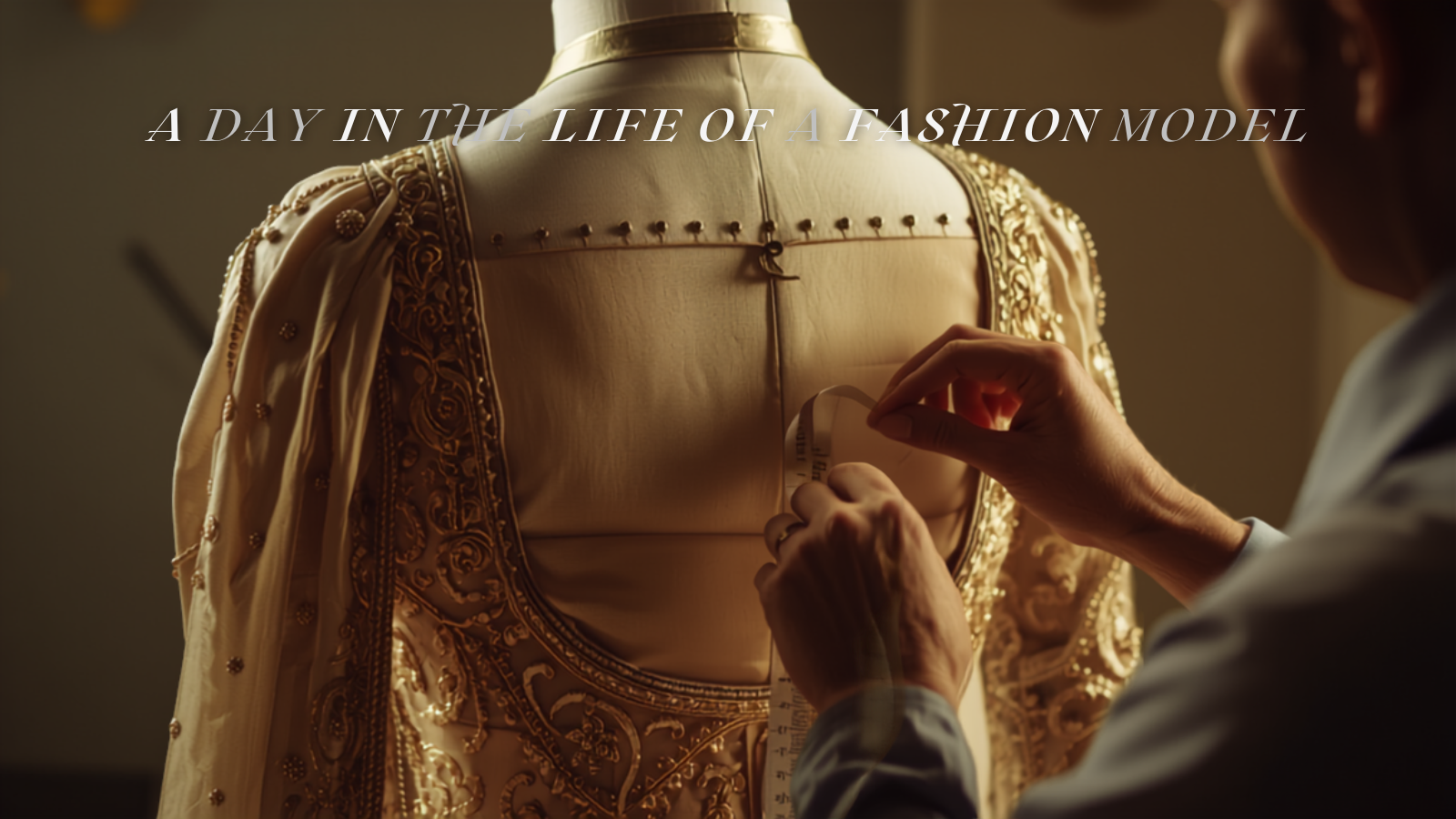
Here is what most people do not see. A proper fitting is not one appointment, it is three or four, spaced out so the tailor can respond to how the body and the fabric actually behave together. The first fitting is about the blouse, because the blouse has become the true hero piece this season, with corset construction, curved necklines and boned bodices doing the structural work that used to sit in the skirt. Get the blouse wrong and no amount of embroidery on the lehenga will save the silhouette.
The second fitting is about the waistband and the fall of the skirt, which is where I watch a bride walk, sit and even attempt a few Sangeet steps in the actual fabric, not a mockup. This is non-negotiable for me. A lehenga that looks flawless standing still can behave completely differently the moment someone needs to fold into a car seat or touch an elder's feet for blessings. The third fitting is for the dupatta and any detachable pieces, because draping changes everything about how a silhouette reads from the front versus how it photographs from behind.
Embroidery placement is its own conversation now, and a welcome one. Instead of dense, all-over sequin work, I am placing fine, hand-set crystals and threadwork strategically, at the neckline, along a hemline, tracing a sleeve, so the embroidery and the fabric each get room to shine rather than competing with each other. It also means the piece photographs with more depth, catching light instead of flattening it.
The Vibe: Fitting for the Whole Wedding, Not One Photograph
One mistake I see often, even among brides who have done their research, is fitting a lehenga for the entrance shot and forgetting the six hours that follow it. I always ask: when do you sit, when do you dance, when does your dupatta need to survive a windy outdoor mandap, when will you be hugging a hundred relatives in a receiving line. Every one of those moments has a fit implication. A gharara or sharara might serve a Sangeet better than a fitted lehenga because it gives you real range of movement. A lighter organza drape might matter more for a Haldi that starts at noon under direct sun than any amount of embellishment would.
I also fit for the in-between moments nobody photographs: getting in and out of a car in traditional finery, climbing temple steps for the Phere, holding a plate of mithai while managing a nath and a dupatta at the same time. These are the tests a fitting has to pass, and they are exactly the tests a hanger cannot predict.
Here is what I want every bride to walk into her fittings knowing:
Schedule at least three fittings, spaced weeks apart, not days apart, so the tailor has room to adjust.
Fit the blouse first. It carries more structural weight in 2026 silhouettes than the skirt does.
Wear your actual jewellery, or a close approximation, to at least one fitting. Necklines shift how a necklace sits and vice versa.
Walk, sit and raise your arms in every fitting. If it restricts you standing still, it will restrict you dancing.
Ask your tailor where the embroidery weight sits. A heavy border on a light fabric changes drape entirely.
Save your lightest fabric for your longest, hottest ceremony, usually the Haldi or a daytime Mehendi.
Bring the shoes you will actually wear. Hemlines are only correct in the shoes that go under them.
None of this is about chasing trends for their own sake. It is about understanding that a bridal wardrobe has to work as hard as the bride does across days of ceremony, temperature, movement and emotion. At SGK Styles, I think of myself as the Creative Director of that wardrobe: someone whose job is to translate a designer's vision into something that survives real life and still looks like it belongs on a runway. The craft is in the fittings nobody sees, not just the entrance everyone photographs.
If you are starting your bridal styling journey and want a wardrobe built around how your wedding will actually unfold, I would love to talk it through with you. Come sit with me, bring your ceremony calendar, and let's build something that moves as beautifully as it photographs.
With love and style,
Shreya Gupta Kedia
Founder, SGK Styles


