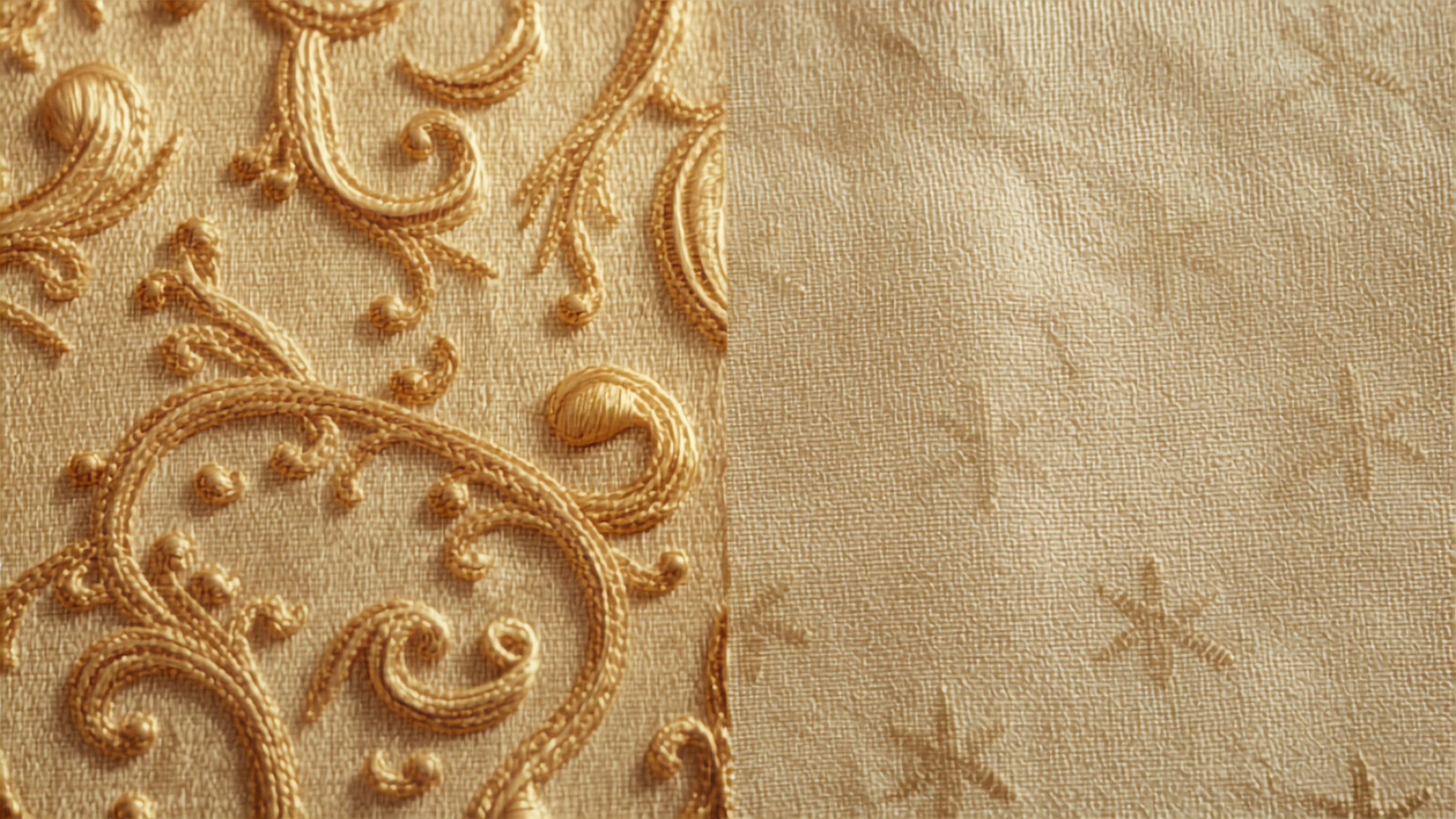
A bride sat across from me last week with two swatches in her lap. One was crusted in gold zardozi so dense it stood up on its own, the kind of work that feels like holding history. The other was a whisper of tissue with fine resham florals climbing across it like a garden waking up. She looked at me and asked the question I hear in some form every single season: "Which one is more bridal?"
Both. Neither. It is the wrong question, and I say that with love. Embroidery is not a ranking, it is a language. Each craft says something different on the body, behaves differently under light, weighs differently on your shoulders at hour nine of the Phere, and photographs differently at every distance. When you choose your bridal embroidery, you are choosing the accent your lehenga will speak in for the rest of your life, in every frame of that album.
July is exactly when this conversation matters. If you are a winter 2026-27 bride, your couture commission is happening now. Zardozi of any real density takes months of karigari, and the ateliers fill up fast once the festive season approaches. So let me teach you the language before you place the order.
The Four Crafts Every Bride Should Know
Zardozi is the emperor of the group. Gold and silver metallic thread, often raised over padding, worked with wire, sequins and stones. It is the heaviest, the most regal, and the most expensive per inch. Done well, it does not sit on fabric so much as sculpt it. This is the craft of ceremony, of heirlooms, of lehengas your granddaughter will fight her cousins for.
Gota patti is Rajasthan's genius: flat ribbons of gold appliqued into motifs. It gives you nearly the shine of zardozi at a fraction of the weight, which is why Mehendi and Haldi outfits love it. It catches light like confetti and it moves.
Resham is silk thread embroidery, the painter of the family. It brings colour rather than metal: florals, birds, entire landscapes if the karigar is ambitious. It reads soft, romantic and youthful, and it is the reason a pastel lehenga can feel alive instead of washed out.
Aari, worked with a hooked needle in fine chain stitch, is the quiet perfectionist. It creates that continuous, flowing tracery you see on the most refined pieces, and it is often the foundation other work is built over. If you have ever admired a lehenga and could not say why it looked so expensive, aari was probably the answer.
Match the Craft to the Ceremony
Here is how I actually deploy these in a multi-day wardrobe. The Phere and the reception carry the metal: zardozi for the ritual, because weight reads as gravitas when you are seated at the mandap, and a sleeker metallic story for the reception where you need to move, greet and dance. The Mehendi and Haldi take gota patti and mirror work, sunshine crafts for daytime functions. The Sangeet is where resham and sequin work shine, colour and sparkle built for motion under stage lighting.
The Stylist's Touch: never let two adjacent events speak the same embroidery language. If your wedding lehenga is dense zardozi, your reception look should shift register entirely, perhaps fine aari with crystal, so each entrance feels new. Repetition, not simplicity, is what makes a wardrobe feel flat.
What 2026 Is Asking of the Needle
The couture floors this year have been fascinating. The single biggest shift I am seeing, and the trend forecasts agree, is that brides want to move. The era of the lehenga so heavy it needed two cousins and a prayer is genuinely ending. Designers are putting serious embroidery on lighter bases: tissue, organza and fluid silks instead of stiff raw silk, so the craft stays rich while the garment breathes.
The metals themselves have softened. In place of brassy gold, ateliers are working in champagne gold, rose ivory and antique silver, tones that give you luxury without shouting. Three-dimensional floral embroidery is having a real moment too: roses, jasmine and lotus motifs built up with knotwork and layered thread until they seem to bloom off the fabric. And heritage is back in the motifs, with temple architecture, Mughal jaalis and nature-drawn patterns replacing generic sparkle.
One more shift I love: the embroidery is migrating to the blouse. Statement backs, dense necklines and richly worked sleeves over a relatively quieter skirt. It concentrates the craft where the camera actually looks, at your face and shoulders.
How Each Craft Photographs
This is the part nobody tells brides, and it is half my job. Metal reflects and thread absorbs. Zardozi and gota patti bounce light back at the lens, which is glorious in candlelight and at night receptions, but in harsh noon sun they can flare and eat detail. Resham does the opposite: it holds its colour beautifully in daylight and can go slightly flat after dark unless it is lifted with sequins or cutdana.
So I ask every bride two questions before we choose: what time is the ceremony, and is it indoors or out? A daytime outdoor Phere argues for resham, gota and mirror work. A night reception under warm light was practically invented for zardozi and crystal. Your photographer will never tell you this at the trial. Your stylist should.
The Stylist's Checklist Before You Commission
Hold the swatch up, not flat on a table: embroidery reads completely differently hanging on a body than lying under showroom lights.
Ask what the base fabric is; the same zardozi on tissue versus raw silk is the difference between floating and carrying.
Wear the sample weight for ten minutes; if your shoulders ache in the fitting room, imagine hour six of the wedding.
Check the back of the work: clean, knotted, even stitches behind the fabric are the signature of a serious atelier.
Match the craft to the light of your venue, metallics for night, thread and mirror for day.
Commission early; genuine hand karigari for a winter wedding should be ordered by August at the latest.
The Thread That Ties It Back
At SGK Styles I talk a lot about Style DNA, the idea that everything you wear should be traceable back to who you are. Embroidery is where that idea becomes literal. Somewhere in Lucknow or Jaipur or Kolkata, a karigar is going to spend hundreds of hours writing your story in thread. The least we can do is make sure it is written in the right language: the craft that suits your ceremonies, your body, your light and your temperament, not just the one that photographed well on someone else's Pinterest.
If you are commissioning your bridal wardrobe for the coming season and the swatches are starting to blur together, come sit with me. We will read them together, and I promise you will leave knowing exactly what your lehenga is trying to say.
With love and style,
Shreya Gupta Kedia
Founder, SGK Styles


