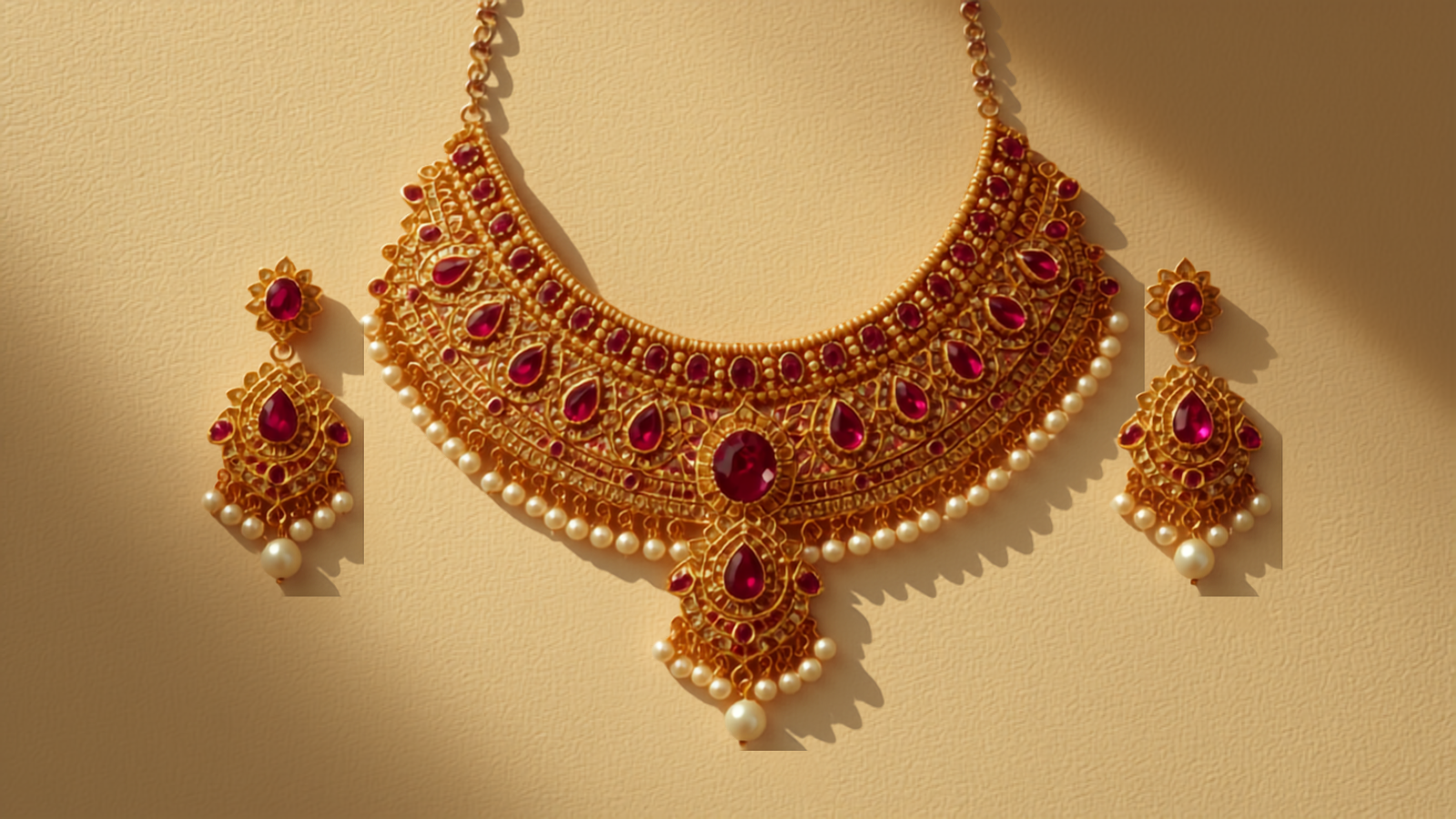
The most common question I am asked in a first fitting is not about the lehenga. It is about the jewellery. A bride opens a velvet box that has travelled three generations, lays a borrowed polki set beside a new emerald choker she fell for online, and looks at me with the same quiet panic every time: how do I wear all of it.
My answer usually surprises her. You don't.
For years the unspoken rule of the Indian bride was abundance. Match the maang tikka to the choker to the haar to the nath to the hand harness, lock the whole armour into place, and walk. It photographed beautifully and it weighed a tonne. But the bride walking into the winter 2026-27 season is asking for something different. She wants to feel like herself under all that gold, not buried by it. This is the year of the statement, not the set, and as a stylist it is my favourite shift in a long time. Let me walk you through what is actually current, and how I would style it for you.
The One Piece That Anchors Everything
The biggest change this season is philosophical before it is decorative. Brides are choosing one bold hero piece and letting everything else recede. A sculptural choker. An oversized nath. A single mathapatti that does all the talking. The look is built around intention rather than coverage.
The Aesthetic: editorial restraint. One striking focal point, then breathing room.
The Stylist's Touch: I always start by asking which feature we are celebrating. If it is your eyes and your hairline, the maang tikka or mathapatti becomes the hero and the neck stays clean. If your lehenga has a deep, beautiful neckline, the necklace earns the spotlight and the head jewellery softens to almost nothing. You are not removing tradition. You are giving it somewhere to land.
Floating Polki and the New Lightness
Polki, those uncut diamonds at the heart of Indian luxury, is still very much the soul of bridal jewellery. What has changed is the setting. Designers are hiding the yellow gold behind the stones so the polki appears to float against the skin, clean and almost weightless to the eye. The effect is regal without looking heavy, modern without losing the heirloom feeling.
Alongside this is the rise of modular jewellery, and it is the most practical trend I have seen in years. A grand bridal choker that detaches into a slim everyday chain. A long haar that becomes a bracelet after the wedding. With gold prices where they are, brides want pieces that keep living long after the phere. I love this for my brides because it answers the question every mother eventually asks: will she ever wear it again. Now, yes.
The Layered Neck
If there is one silhouette ruling the neckline this season, it is the layered stack. You begin with a structured choker sitting high and snug. You add a medium strand. Then you finish with a long rani haar that falls across the chest. Three lengths, one rhythm.
The Vibe: majestic, but balanced. Layered correctly, it reads rich rather than crowded, and it photographs like a dream from every angle, which matters more than brides expect across a multi-day celebration.
The Stylist's Touch: layering is where most looks go wrong, because the temptation is to keep adding. My rule is that the lengths must be distinct, never crowding into each other, and the necklace stack should echo the neckline of the blouse, not fight it. A deep V or a sweetheart neck is built for this. A high collar almost never is.
Beyond the Necklace: Nath, Ears and the Floral Return
The nose now carries real drama. Oversized naths, the kind that sweep from nostril to ear with a fine supporting chain, are firmly back, and on the right face they can carry an entire look. The ears are having a moment too. Ear chains that connect the earring to the hair or the blouse are returning quietly, adding movement without weight, and sculptural ear cuffs that trace the curve of the ear are giving brides a runway edge, especially with a sleek bun or a centre-parted sleek finish.
And then there are the kaleeras. The metal versions our mothers wore have softened into floral kaleeras, lighter and more playful, often woven with fresh blooms and pastel detailing. For a Mehendi or a Haldi where the mood is joyful and unfussy, they are the loveliest hint of tradition without a gram of extra weight.
A note I give every bride: the dupatta is jewellery too. The sheer organza, tulle and net dupattas trending this season, scattered with hand-placed crystals or the faintest gota patti border, frame the face like a veil and finish the jewellery story rather than competing with it.
A Word on Colour
The palette is shifting in a way I find genuinely exciting. Emerald green is the colour of the season, and not as an accent. Deep green stones flatter nearly every skin tone and bring a richness that red and gold alone cannot, which is why you are seeing them anchor so many 2026 bridal sets. For the bride in pastels, polki and kundan are moving past the traditional red-and-green pairing into mint, blush and powder blue, soft enough to sit gracefully against a champagne or ivory lehenga.
Here is how I would translate all of this into decisions you can actually make:
Choose your hero piece first, then build the rest of the look to support it, not match it.
Look for floating polki settings if you want heirloom richness that still feels light and current.
Ask whether a grand piece is modular, because jewellery you can wear again is jewellery worth investing in.
For layering, keep the lengths distinct and let the necklace stack echo your neckline rather than crowd it.
Reserve the bold nath, ear cuffs or floral kaleeras for the events where your hair is sleek and your outfit is calm enough to hold them.
Consider an emerald anchor or a pastel polki set if you want to step gently away from the expected red and gold.
Treat your dupatta as the final accessory, not an afterthought.
The SGK Philosophy
At SGK Styles, I have never believed jewellery is meant to be worn. I believe it is meant to be carried, the way you carry a memory or a name. The most beautiful brides I have styled were never the most heavily adorned. They were the ones who looked completely, unmistakably like themselves, with one piece that made you catch your breath and nothing else asking for attention. That is the whole art of it. Knowing what to leave in the box.
If you are planning your winter wedding and standing in front of that same velvet box wondering how to wear all of it, I would love to help you decide what to wear and, just as importantly, what to set aside. Reach out whenever you are ready. There is no rush, and there is always tea.
With love and style,
Shreya Gupta Kedia
Founder, SGK Styles


