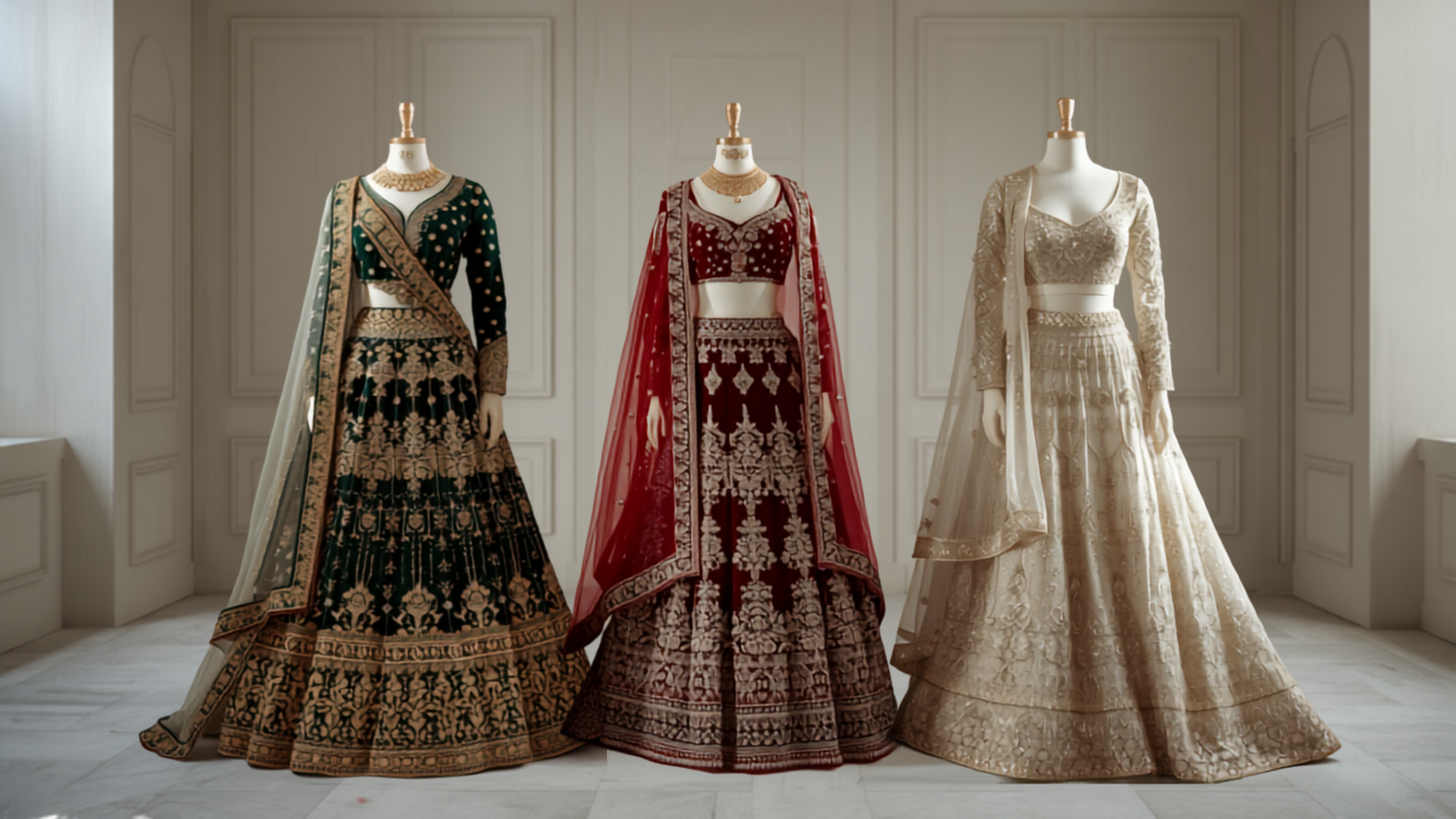
A bride messaged me last week with a screenshot of a Sabyasachi lehenga and one sentence underneath: "I want this, but I have no idea where to even begin." I smiled, because I hear a version of that almost every Sunday. The big couture houses can feel like a beautiful, intimidating wall. You know the names. You have saved the pictures. And then you stand at the threshold of the flagship store, or worse, in front of a website with no prices, and you freeze.
So today I want to do something practical. Consider this your shopping companion for the winter 2026 wedding season, which, if you are getting married between November and February, you should already be thinking about. The best appointments fill up six to eight months ahead, and the most coveted pieces are made to order. This is the moment to start.
Let me pull back the curtain on the three houses my brides ask about most, what each one actually does best right now, and how to walk in knowing exactly what you are looking for.
Sabyasachi: Heritage, Reframed
If you want to feel like you are wearing a piece of history that somehow still looks modern, this is your house. Sabyasachi's current direction, which the atelier has been calling A New India, takes vintage embroidery and sets it against sharper, cleaner silhouettes. The drama is in the detail, not the volume.
What is genuinely new this season is the palette. For years the house was synonymous with deep bridal red, and red is having a real comeback in 2026, but the 2026 lookbook leaned just as hard into oxblood, old rose and ivory. There is also a quiet rise of navy as a bridal colour, deep and regal, sometimes drenched in sequins, sometimes kept matte and grown-up. If you have always loved the idea of a Sabya bride but feared looking like everyone else, this is your opening.
The Stylist's Touch: I steer brides here when they want heirloom jewellery to be part of the story. Sabyasachi's uncut polki, the oversized jhumkas, the layered chokers, these are designed to anchor a whole look. Buy the lehenga and the jewellery as one conversation, not two. And ask about raw silk and tissue, because the atelier has reported a real shift away from heavy velvet toward lighter fabrics. Your back will thank you at 2am on the dance floor.
Manish Malhotra: Glamour That Moves
Where Sabyasachi whispers heritage, Manish Malhotra turns up the shine. This is the house for the bride who wants to glow, who loves a little Bollywood in her blood, who pictures herself under the Sangeet lights and wants the light to find her.
The most useful thing I can tell you about his 2026 line is that it got lighter. His couture week showcase introduced emerald and a soft dusty pink as headline bridal colours, and reports out of the atelier suggest the average lehenga weight dropped by roughly thirty percent compared to a few years ago. That matters more than it sounds. A lehenga you can actually dance in, sit through a long Phere in, and carry across a hotel lobby without two people holding the pallu, is a lehenga you will love rather than endure.
The Vibe: cinematic, celebratory, camera-ready. If your wedding has a big Sangeet or a reception that is the centrepiece, this is where I look first.
Anita Dongre: The Conscious Romantic
Not every bride wants maximalism, and I love that more of you are saying so out loud. Anita Dongre is the house I turn to for the bride who wants softness, breathability and a conscience. Think gota patti and delicate thread work, lighter pastels, and a sustainability ethic that runs through the brand rather than sitting on top of it as a marketing line.
She, along with houses like Raw Mango, helped pioneer the move toward softer palettes years ago, and the fact that even Sabyasachi has expanded into gentler tones tells you the shift is permanent, not a passing season. Anita Dongre is also, refreshingly, more accessible. Where the top couture lehengas can run from two lakh well into the double digits, her bridal pieces tend to begin in the fifty thousand to one and a half lakh range, which makes her a brilliant choice for a Mehendi, a Haldi, or an intimate court wedding where you still want the designer hand without the headline price.
How to Actually Shop Them
Here is what I wish every bride knew before her first appointment.
Book early. Made-to-order couture needs three to six months, sometimes more. Walk in six to eight months ahead of your date, not six weeks.
Know your function before you fall in love. A reception gown and a Phere lehenga are different jobs. Decide what each outfit has to do before you let your heart choose.
Ask about weight, lining and the blouse. The fabric and the fit are what you live in all night, not the photo.
Consider the rental route for the supporting events. The luxury rental market is growing fast, and platforms now offer authenticated Sabyasachi and Manish Malhotra pieces. Save the big spend for your main moment.
Buy the jewellery in the same breath as the outfit. The look is the whole sentence, not just the lehenga.
The SGK Philosophy
Here is the truth underneath all of this. A famous label does not make a bride. The right label, styled for your body, your function and your story, does. My job is never to hand you the most expensive thing in the room. It is to help you walk into these beautiful, intimidating houses already knowing who you are, so the clothes serve you and not the other way around. You are the Creative Director of your wedding wardrobe. The designers are your collaborators.
If you are starting your winter 2026 shopping and feeling that flicker of overwhelm, that is exactly the moment to reach out. I would love to sit with you, map your functions, and build the plan before you ever set foot in a flagship. No pressure, just a calmer, clearer place to begin.
With love and style,
Shreya Gupta Kedia
Founder, SGK Styles


