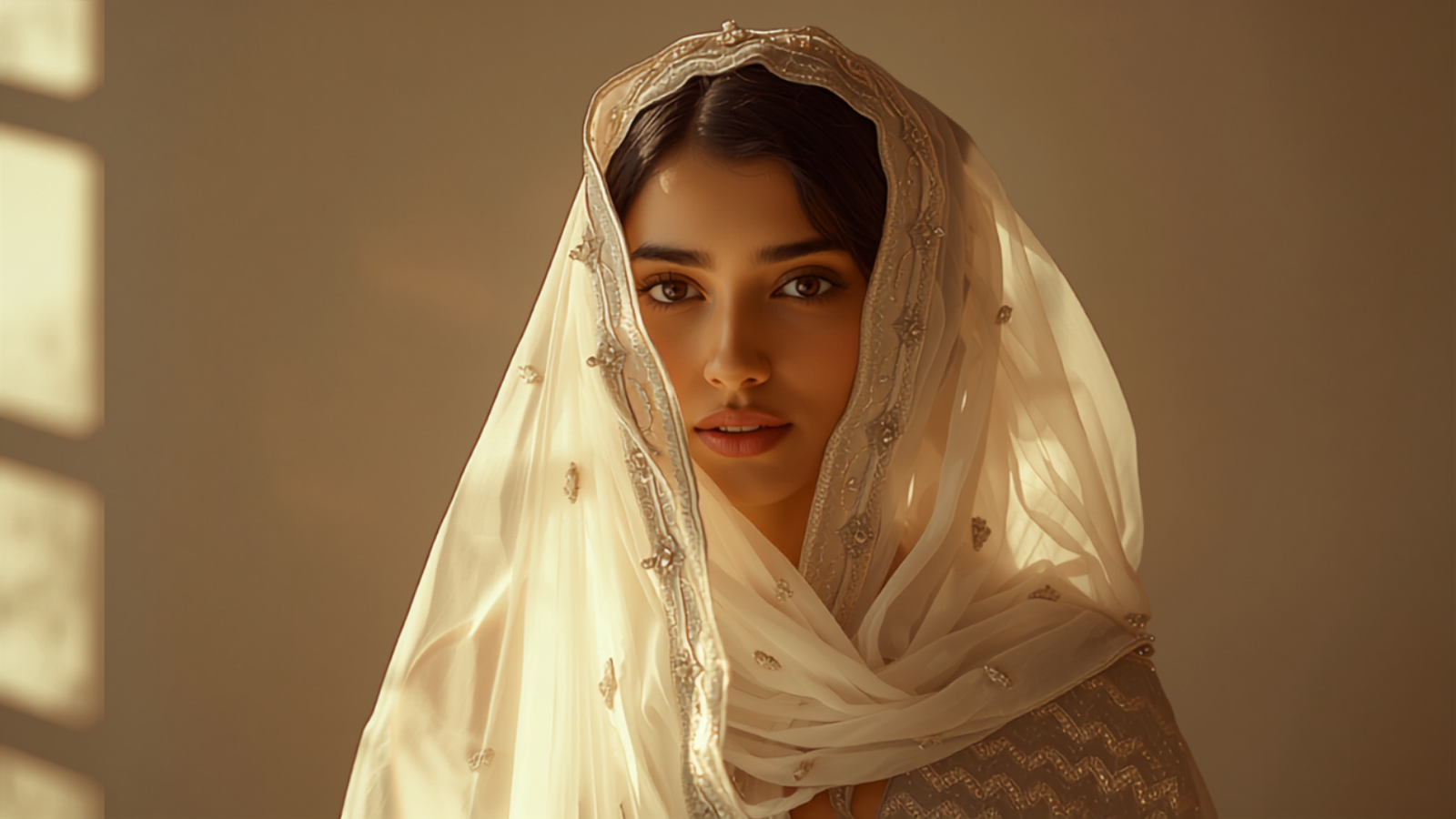
A bride once stood in front of my mirror, fully dressed, and told me something was missing. The lehenga fit beautifully. The blouse was perfect. The jewellery sat exactly where it should. And yet she looked at her reflection and felt flat, like a sentence with no punctuation. So I reached for her dupatta, draped it over one shoulder, let it fall into a soft diagonal across her torso, pinned a single point at her waist, and stepped back. She gasped. Nothing about the outfit had changed except the dupatta. That is the secret hiding in plain sight on every bridal Pinterest board. The dupatta is not an accessory. It is the architecture of movement, and how you drape it can change everything.
I think of the dupatta as the most underestimated tool in a bride's wardrobe. Brides will spend months agonising over the embroidery on a lehenga and then treat the dupatta as an afterthought, something to be flung over the head five minutes before the Phere. But here is what I tell every bride who sits with me at SGK Styles: the silhouette people remember is the one created by the dupatta, because it is the part of you that moves. It catches the light. It frames your face. It is the difference between standing still and floating.
The Aesthetic: Why 2026 Is the Year of the Layered Drape
The single biggest shift I am seeing this season is the rise of the double dupatta. For winter weddings especially, brides are choosing two: one heavier piece, often velvet or richly worked zardozi, draped low around the torso to add weight and drama, and a second, lighter, sheerer dupatta carried over the head to mimic a veil. The effect is regal and layered, full of dimension. One gives you structure. The other gives you air. Together they create that sense of a bride who arrives in stages, the way the best entrances always do.
This is not new, of course. The double dupatta is rooted in old Mughal and royal dressing, and houses like Sabyasachi and Falguni Shane Peacock have been quietly championing it for years. What is new is how brides are wearing it. The standard pallu-over-the-head drape is making room for cape-style throws, one-shoulder falls, and structured layers that sit closer to couture than to convention. The grammar of the drape is loosening, and I love that, because it means the dupatta can finally be styled to the bride instead of the bride being styled to the dupatta.
The Stylist's Touch: Reading the Drape to the Body
Here is the part most tutorials skip. A drape is not one-size-fits-all, and the right one depends entirely on your proportions, your ceremony, and how much you want to move.
For a petite bride, I almost always avoid the heavy double-drape that swallows the frame. A single diagonal drape, pinned at the shoulder and falling clean to the opposite hip, lengthens the body and keeps everything in proportion. For a taller bride, the seated pallu drape, where the dupatta is spread wide across the lap and back, is pure drama and she can carry every inch of it. For brides who want their blouse to be the hero (and after the season we have just had, with backs and necklines doing all the talking, many do), I keep the dupatta off both shoulders entirely, draped only across the forearms like a sash, so nothing competes with the bodice.
And then there is the question nobody asks until it is too late: can you actually walk in it. A dupatta drape that looks exquisite in a photo can become a tripping hazard during the Phere or a constant fidget through the Sangeet. Part of my job is engineering the drape so it holds. The right pins, in the right places, are invisible and load-bearing. A drape that needs ten people to fix it every time you sit down is not a styled drape. It is a liability dressed up as glamour.
The Vibe: Matching the Drape to the Ceremony
I always remind my brides that they are not styling one dupatta, they are styling a wardrobe across several days, and the drape should evolve with the energy of each function.
For the Mehendi and Haldi, when you are seated for hours and your hands are occupied, go light and go off the head. A gota patti or bandhani dupatta draped simply across one shoulder keeps you free to move, to laugh, to let people hold your hands. Save the elaborate work for where it counts.
For the Sangeet, this is where the cape drape earns its place. Pinned at both shoulders and left to fall behind you like wings, it photographs beautifully when you dance and never gets in the way of your feet. It is celebration distilled into fabric.
For the wedding day itself, the Phere, this is the moment for the full double dupatta. The heavier piece grounds you. The lighter veil over the head softens every photograph and gives you that timeless, luminous frame. This is the look you will see hanging on your wall in thirty years, so it deserves the most thought and the most engineering.
Here is what I want every bride to carry with her into her trials:
Treat the dupatta as a design decision, not a final-minute toss. Plan it the way you plan the lehenga.
For winter 2026, consider two dupattas: one heavy for the torso, one sheer for the head. Layering is the whole story this season.
Match the weight of the drape to your proportions. Petite frames love a clean diagonal. Taller brides can carry the wide seated pallu.
Pin for the photograph and for the function. A drape you cannot move in is not finished.
Let the drape change across your events. Light and free for Mehendi, winged for Sangeet, layered and grand for the Phere.
If your blouse is the star, keep the dupatta low and off the shoulders so it frames rather than covers.
The SGK Philosophy
At SGK Styles, I have always believed that bridal styling is not about adding more. It is about understanding what every piece is quietly doing, and the dupatta is the most eloquent piece of all. It is the part of your look that breathes, that moves with you down the aisle, that lifts in the wind during your couple portraits. When a bride learns to drape with intention, she stops being someone wearing an outfit and becomes the Creative Director of her own entrance.
The colours leading this season make it even more worth getting right. Soft ivories, champagne golds, muted peaches, pistachio greens and powder blues are everywhere, and against those gentle palettes the drape becomes the line of drama that holds the whole look together. Quiet fabric, confident architecture. That is the SGK signature.
If you are planning a 2026 wedding and you want your dupatta to do more than sit on your shoulders, I would love to help you find the drape that is unmistakably yours. Come sit with me. We will play with fabric and pins and light until your reflection makes you gasp, the way that bride in my mirror did. That moment is always there. Sometimes it just needs the right drape to find it.
With love and style,
Shreya Gupta Kedia
Founder, SGK Styles


